What if this isn’t just a fighter jet deal… but a long-term power shift in global defence?
And what if the real story isn’t about jets—but about influence, strategy, and the future of air dominance?
That’s exactly what the UK–Turkey Eurofighter agreement represents.
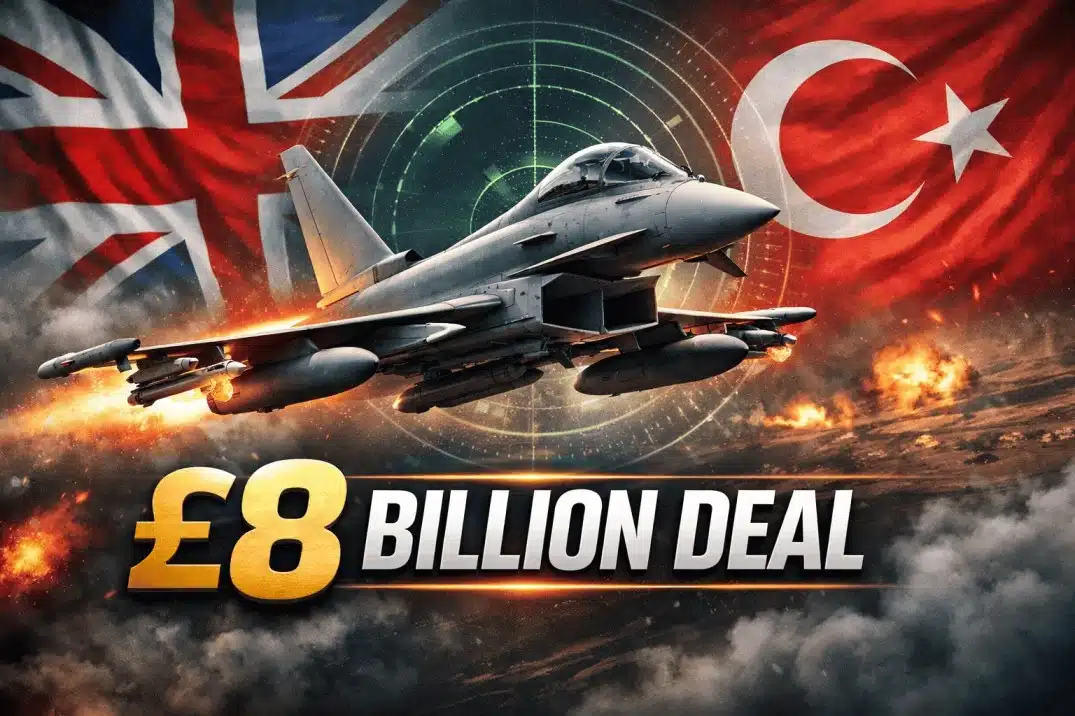
This isn’t a simple buy-and-sell contract. It’s a multi-layered defence ecosystem deal worth over £8 billion that could redefine how nations build military power in the 21st century.
Breaking Down the £8 Billion Jet Deal — Where the Money Really Goes
Embed from Getty ImagesAt first glance, the number is massive: £8 billion+. But the structure of this Jet deal reveals something more important than the total value.
Financial Breakdown of Eurofighter Jet Deal
- £5.4 billion → Fighter aircraft (20 Eurofighter Typhoons)
- £2.6 billion → Training, logistics, and support
- Total ecosystem value → £8 billion+
Unlike traditional arms deals, a large portion of this investment is focused on long-term operational capability rather than just hardware.
Why This Matters
Modern defence economics has changed:
- Fighter jets require decades of maintenance and upgrades
- Training systems are as critical as the aircraft itself
- Lifecycle costs often exceed purchase costs
Turkey is not just buying jets — it’s buying sustained air power capability.
What Exactly Is Included in the Jet Deal?
To truly understand the impact, you need to look beyond the aircraft.
1. Advanced Combat Aircraft
At the core are 20 Eurofighter Typhoon jets — among the most capable 4.5-generation fighters in the world.
These aircraft are designed for:
- Air superiority missions
- Precision ground strikes
- Multi-role combat flexibility
2. Training & Simulation Ecosystem
This Jet deal includes a full training pipeline:
- Pilot training programs in the UK
- Advanced flight simulators
- Ground crew and technician training
Even the most advanced jet is useless without highly trained operators.
3. Maintenance & Sustainment Systems
A major portion of the deal is focused on:
- Spare parts supply
- Repair infrastructure
- Long-term servicing
Turkey aims to gradually develop domestic maintenance capabilities, reducing dependence on external suppliers.
4. Industrial Collaboration
The Eurofighter Jet deal involves major defence companies:
- BAE Systems
- Rolls-Royce
- Leonardo
- MBDA
This creates:
- High-value jobs
- Technology sharing
- Long-term industrial partnerships
Technology Advantage — Why These Jets Are Future-Ready
The Eurofighter Typhoon is not a legacy system. It is a continuously evolving platform.
Key Capabilities
- Advanced avionics and sensor fusion
- Multi-role combat adaptability
- Upgrade-ready architecture
AESA Radar Edge
One of the biggest advantages is the advanced radar system:
- Tracks multiple targets simultaneously
- Longer detection range
- Better resistance to electronic warfare
Why Turkey Is Investing Heavily in This Deal
Turkey’s decision is not random—it’s strategic.
1. After Exit from the F-35 Lightning II Program
Turkey needed:
- A high-end alternative
- NATO-compatible aircraft
2. Regional Security Pressure
Turkey is located in a high-tension region:
- Middle East conflicts
- Eastern Mediterranean disputes
- European security dynamics
A strong air force = stronger deterrence.
3. Defence Diversification Strategy
Turkey is moving toward:
- Multi-source defence procurement
- Reduced dependence on any one country
This increases:
- Strategic autonomy
- Negotiation power
UK’s Economic and Strategic Gains
This deal is equally important for the United Kingdom.
1. Economic Boost
- Supports thousands of skilled jobs
- Strengthens aerospace supply chains
2. Sustaining the Eurofighter Program
Without new orders:
- Production lines slow down
- Skilled workforce declines
This Eurofighter jet deal ensures continuity.
3. Global Influence Expansion
Defence exports are not just business—they are diplomacy.
The UK strengthens:
- Military partnerships
- Long-term geopolitical influence
NATO and Global Geopolitical Impact
1. Strengthening NATO
Turkey’s location is strategic:
- Bridge between Europe and Asia
- Close to conflict zones
A stronger Turkish air force strengthens NATO’s defence posture.
2. Rise of European Defence Independence
This deal reflects a larger trend:
- Europe reducing reliance on US defence systems
- Growth of European defence manufacturing
3. Signal to Global Defence Markets
This agreement shows:
- European systems remain competitive
- Large-scale defence partnerships are evolving
Risks, Challenges & Controversies
No deal of this scale is without concerns.
1. Political Sensitivities
- Concerns over defence exports
- Ethical debates in global arms trade
2. Financial Burden
- High upfront cost
- Long-term commitments
3. Supply Chain Dependence
Even with localization:
- Some reliance on European systems remains
Future Outlook — What Happens Next?
Timeline
- Deliveries expected around 2030
- Full operational capability later
Upgrade Potential
Future upgrades may include:
- Enhanced radar systems
- Electronic warfare improvements
- New weapons integration
Long-Term Strategy
Turkey aims to:
- Use Eurofighters as a bridge
- Develop indigenous fighter programs
Final Deep Insight — The Real Meaning of This Deal
This agreement highlights a global shift:
- Defence is moving toward ecosystem-based partnerships
- Countries are prioritizing flexibility and independence
- Economic and military strategies are deeply interconnected
This is not just about aircraft.
It’s about who controls the future of air power.
One-Line Power Takeaway
The UK exports defence capability and influence—while Turkey builds long-term air dominance and strategic independence.
Conclusion
The UK–Turkey Eurofighter deal is a perfect example of how modern defence agreements go far beyond weapons.
It’s about:
- Strategy
- Influence
- Long-term power positioning
And as global tensions evolve, deals like this will define the next era of military balance.
Want more deep, no-noise analysis like this?
Explore more on Viral Kidda — your hub for fast, factual, and deep global insights.
External References
- Reuters – UK Turkey Deal Sign Multi Billion Pound
- Defense news – turkey uk sign training and support deal
- Janes – insights turkiye to field tranche 4 eurofighters fitted with ecrs mk radar
FAQ
Q1. What is the UK–Turkey Eurofighter deal?
It is a defence agreement worth over £8 billion involving the sale of 20 Eurofighter jets along with training, maintenance, and support systems.
Q2. Why is this deal important?
It strengthens Turkey’s air force, supports UK defence exports, and enhances NATO’s strategic capabilities.
Q3. What aircraft are included in the deal?
The deal includes advanced Eurofighter Typhoon multi-role fighter jets.
Q4. When will the jets be delivered?
Deliveries are expected to begin around 2030.
Q5. What is the strategic impact of this deal?
It improves regional security, boosts defence collaboration, and reflects a shift toward multi-polar military partnerships.
Disclaimer
This article is for informational and educational purposes only. It is based on publicly available sources and does not promote or endorse any defence activity, organization, or government policy. All trademarks and references belong to their respective owners.