What if the reality you experience every day is only a simplified version of something far stranger, far more powerful, and completely invisible?
Right now, as you read this, particles smaller than atoms are behaving in ways that defy logic, existing in multiple places at once, communicating instantly across space, and shaping the technology you rely on every single day. This is not science fiction. This is quantum physics, the hidden engine behind modern life.
From your smartphone processor to GPS navigation, medical scans, and even the encryption protecting your bank account, all depend on rules that most people have never truly understood. And here’s the surprising part: we’ve only just begun to unlock its full potential.

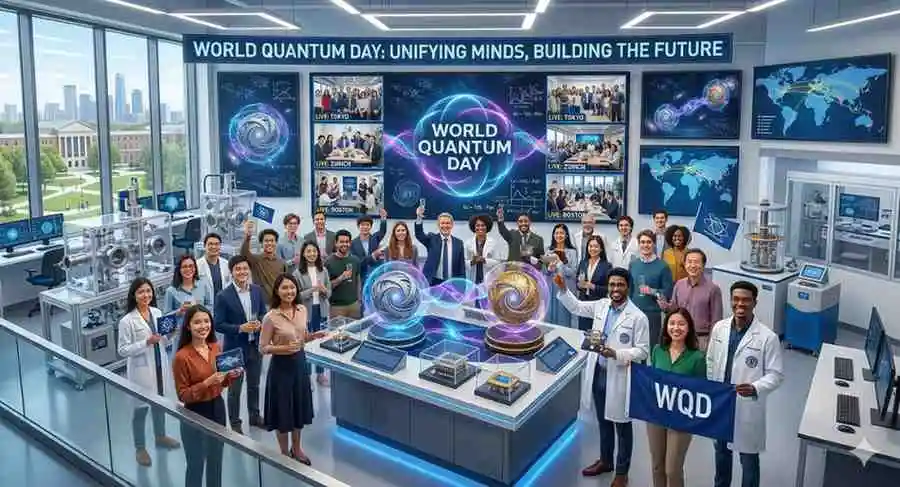
That’s where World Quantum Day, celebrated every year on April 14, comes in. It’s not just another date on the calendar; it’s a global wake-up call. A reminder that humanity is stepping into a new scientific era where the boundaries of reality, technology, and intelligence are about to shift in ways we can barely imagine.
If this already feels like the plot of a blockbuster, you’re closer to the truth than you think.
Why April 14 Is Celebrated as World Quantum Day
The choice of April 14 (4/14) is deeply symbolic. It directly connects to one of the most important numbers in physics:
Planck’s Constant ≈ 4.14 × 10⁻¹⁵ eV·s
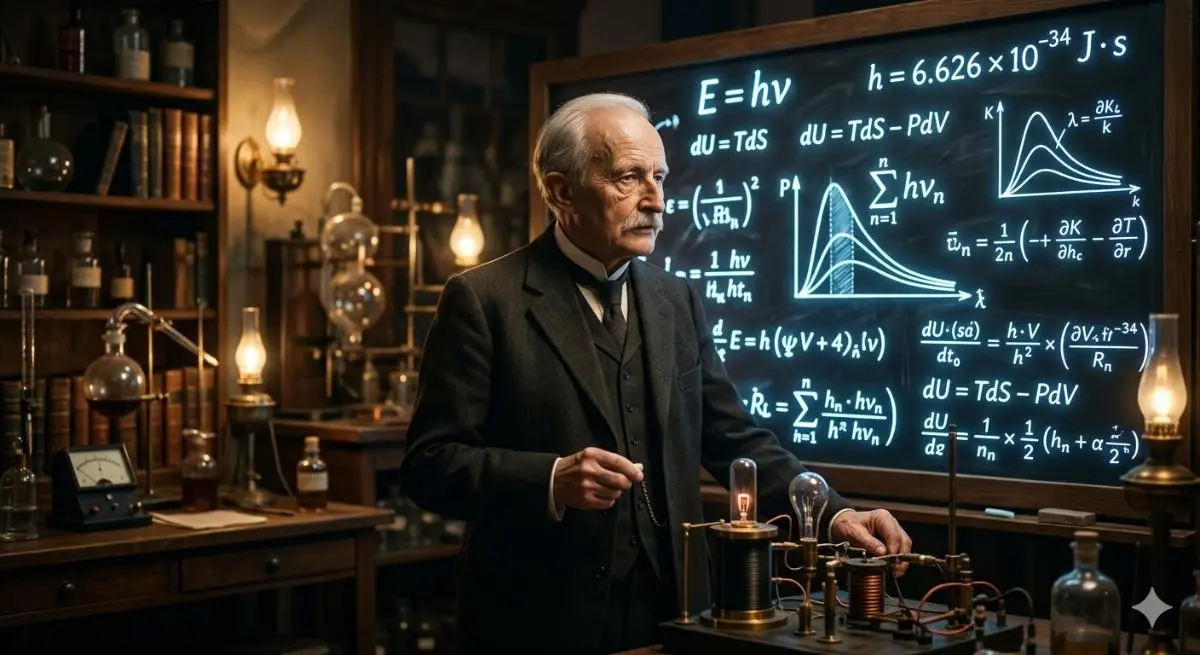
This constant represents the smallest measurable unit of energy exchange in the universe. It was discovered by Max Planck, a scientist who unintentionally launched one of the biggest revolutions in scientific understanding.
According to the official global initiative, World Quantum Day aims to increase awareness and understanding of quantum science worldwide (source). This date symbolically connects science, education, and the future, making it a perfect global observance.
Who Was Max Planck? The Man Who Changed Physics Forever
Max Planck was a German physicist whose work in the early 1900s reshaped our understanding of energy. Before Planck, scientists believed energy flowed continuously, like a stream. But Planck’s discovery revealed the following:
Energy exists in discrete packets called quanta. (Source)
This single idea laid the foundation for quantum theory, influencing legends like Albert Einstein and Niels Bohr. Without Planck’s discovery:
- Modern electronics wouldn’t exist
- Quantum computing wouldn’t be possible
- Our understanding of atoms would be incomplete
What is Quantum Theory?
Quantum theory explains how matter and energy behave at the smallest scales, on the atomic and subatomic scales. Unlike classical physics, which deals with predictable systems, quantum theory introduces a new reality: things are probabilistic, not certain.
Instead of “this will happen,” quantum physics says, “there is a probability this might happen.” This shift from certainty to probability makes quantum science both powerful and challenging to understand.
Core Concepts of Quantum Physics
Superposition: Being in Two States at Once
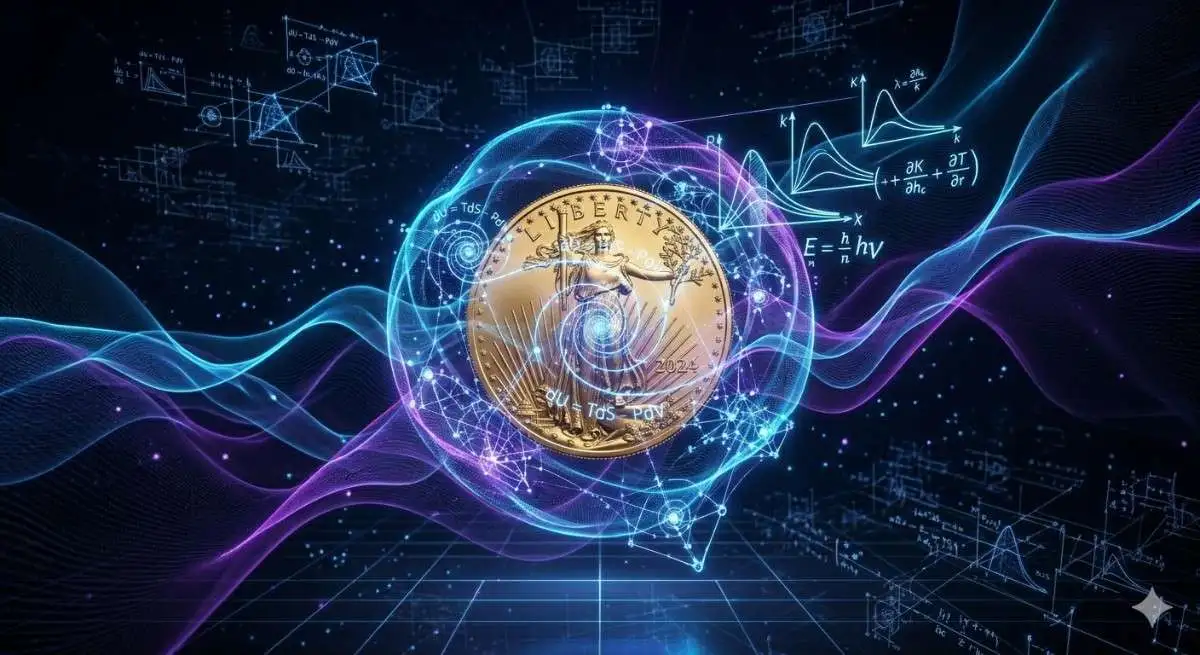
Particles, such as electrons, do not exist in a single fixed state but in multiple states simultaneously until observed. Imagine flipping a coin that is both heads and tails at once until you look; this is superposition.
In computing, this principle allows qubits in quantum computers to represent both 0 and 1 at the same time, vastly accelerating problem-solving compared to classical bits.
Quantum Entanglement: Instant Connection Across Space
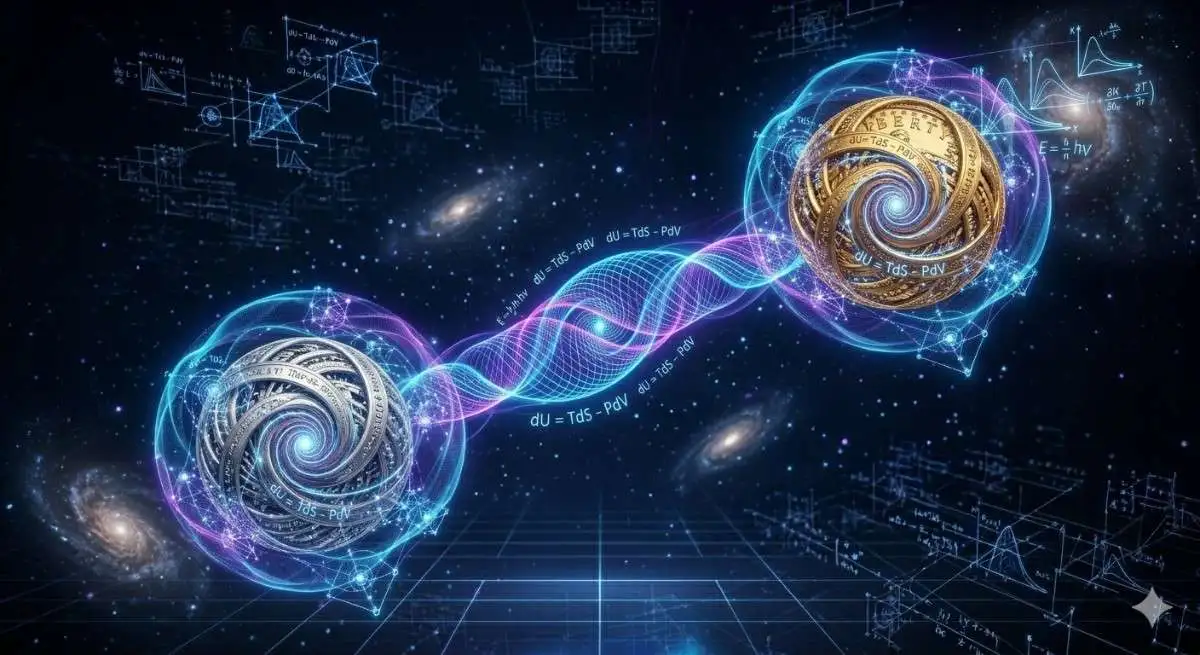
When two particles become entangled, their states link instantly, no matter the distance. Einstein called this “spooky action at a distance.” Entanglement is the basis for future technologies like the quantum internet, promising ultra-secure communication.
Wave-Particle Duality: Two Natures, One Reality
Particles behave both as particles and waves depending on observation. This duality challenges everyday intuition and underpins technologies like electron microscopes and semiconductors.
Observer Effect: Reality Changes When Observed
In quantum physics, observation affects the state of particles, forcing a system to choose a definite outcome. This raises deep questions about the nature of reality and measurement.
Uncertainty Principle: The Limits of What We Can Know
Introduced by Werner Heisenberg, this principle states you cannot know both the exact position and momentum of a particle simultaneously, a fundamental limit of nature, not a technological flaw, introducing inherent randomness to the universe.
Planck’s Constant Explained in Real Life
Planck’s constant links energy and frequency, defining the smallest “unit” of energy. It is vital for understanding atoms, designing semiconductors, and developing quantum technologies. Without it, modern science would collapse. (sources)
Why World Quantum Day Matters Today
- Awareness & Education: Simplifies complex quantum concepts, inspiring students and the public.
- Global Collaboration: Unites universities, labs, and companies to drive innovation.
- Innovation Acceleration: Speeds up research and adoption of quantum technologies.
Everyday Technologies Powered by Quantum Science
You use quantum-powered technologies daily, often without realizing it:
- Smartphones & Electronics: Transistors inside microchips operate using quantum mechanics.
- Internet & Communication: Fiber optics relies on the quantum behavior of photons for fast data transfer.
- Banking Security: Encryption systems are based on quantum principles; quantum cryptography promises next-level security.
- Medical Imaging: MRI machines exploit quantum properties for detailed body scans.
The Future of Quantum Across Industries
- Artificial Intelligence: Quantum computing could revolutionize AI with faster, more powerful data processing.
- Cybersecurity: Quantum cryptography promises unbreakable encryption but also challenges current security methods.
- Healthcare & Drug Discovery: Quantum simulations can accelerate medicine development and personalize treatments.
- Finance: Quantum algorithms offer real-time market analysis, risk assessment, and fraud detection.
- Climate Science: Quantum computing aids in climate modeling, renewable energy optimization, and weather prediction.
Quantum Science in Marvel Movies: Reality vs Fiction
Marvel’s cinematic universe popularizes quantum ideas with creative liberties:
- Ant-Man: Shrinking into the Quantum Realm is fictional but inspired by real quantum scale differences.
- Ant-Man and the Wasp: Time distortion and quantum energy are dramatized but touch on real scientific theories.
- Avengers: Endgame: Quantum time travel and multiverse ideas are speculative, not scientifically proven.
- Quantumania: Depicts civilizations inside the quantum realm; pure fiction but inspired by theories of hidden dimensions.
Marvel’s portrayal, while fictional, sparks curiosity and introduces millions to quantum concepts & World Quantum Day.
Global Investments: The Quantum Race Has Begun
Countries like the USA, China, the EU, and India are investing billions in quantum research and celebrating World Quantum Day, signaling a new global power shift toward quantum technologies.
Quantum + AI: Building Future Civilizations
The combination of quantum computing and AI promises:
- Self-learning intelligent systems
- Advanced simulations of economies and societies
- Breakthrough discoveries and innovations in record time
This synergy could redefine governance, healthcare, and the global economy, so its globally celebrates World Quantum Day for awareness, etc.
Deep Insights & Mind-Blowing Facts
- Quantum particles can tunnel through barriers.
- Quantum randomness is fundamentally unpredictable.
- Quantum computers outperform classical systems in specific tasks.
- The universe behaves probabilistically at its core.
Conclusion: The Beginning of a New Scientific Era
World Quantum Day is not just a celebration of theory—it marks a shift in human understanding. From Max Planck’s discovery to today’s breakthroughs, quantum science is ushering in a future where:
- Technology becomes exponentially powerful
- Security becomes nearly unbreakable
- Intelligence reaches unimaginable levels
Understanding quantum today means understanding the future tomorrow.
FAQ
Q1. What is World Quantum Day?
World Quantum Day is celebrated on April 14 to promote awareness and understanding of quantum science and technology.
Q2. Why is April 14 chosen?
It represents Planck’s constant (4.14 × 10⁻¹⁵ eV·s), a key value in quantum physics.
Q3. What is quantum theory in simple words?
It explains how particles behave at very small scales where classical physics doesn’t work.
Q4. Is quantum technology used today?
Yes, in smartphones, encryption, medical imaging, and more.
Q5. Is Marvel’s quantum realm real?
No, it is fictional but inspired by real quantum concepts.
For more deep, viral, and future-focused breakdowns, explore Viral Kidda—your hub for tech, trends, and truth.
Disclaimer
This article is for educational and informational purposes only. While based on verified scientific concepts and publicly available sources, some simplified explanations are used for clarity. It does not represent professional scientific advice.